
John Consalvo
Vessel Name: Islander
John Consalvo
Islander
14 August 1875
Buried at sea
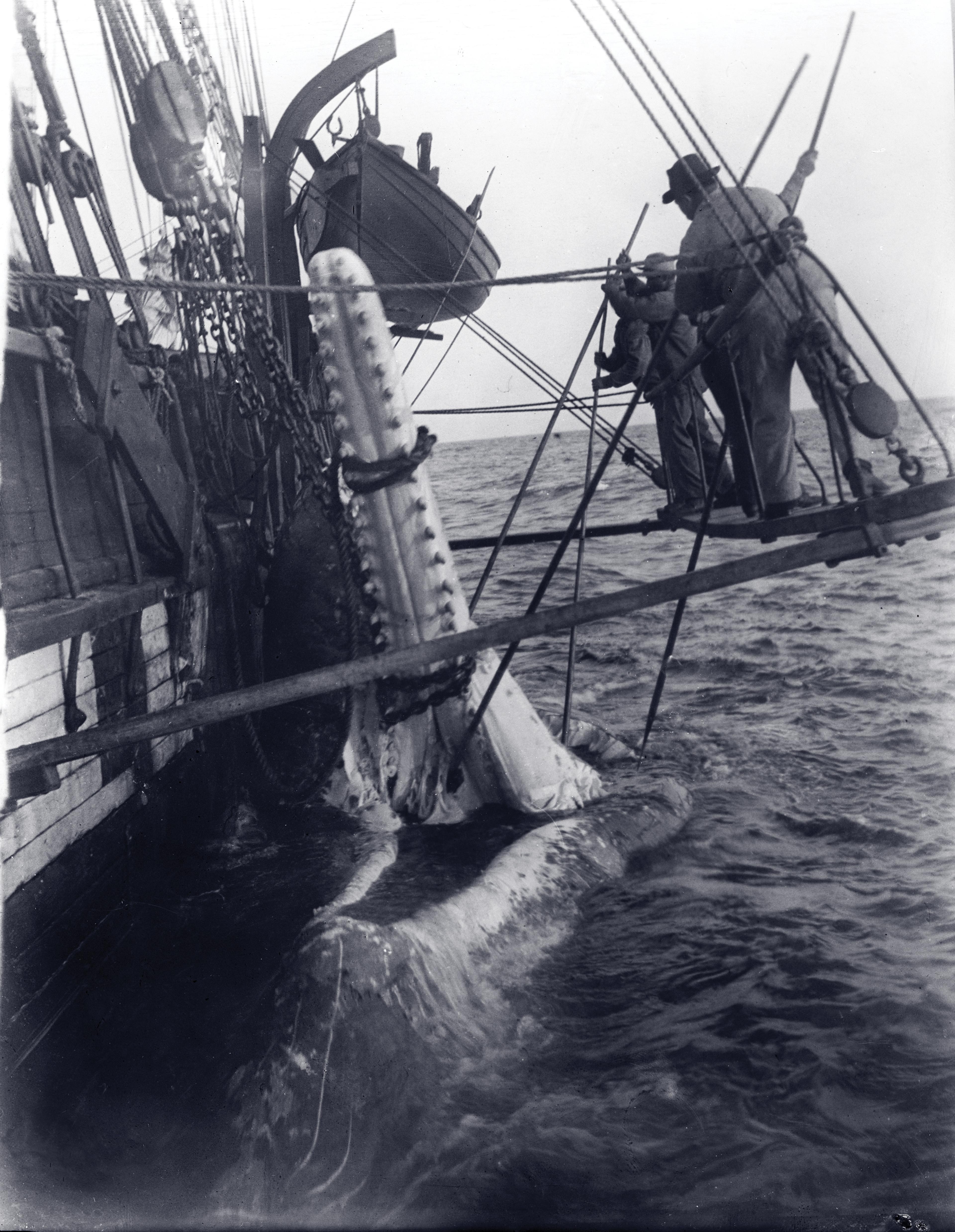
Ready to process a whale at sea.
The barque Islander has a mysterious past. Records and ship’s logs prior to 1871 are sketchy. She was a three-masted barque weighing 200 tons. She was 92 feet long, 23 feet across her beam and she drew 12 feet of water.
Whaleship Islander was likely built in 1856 in Fairhaven, America. The American barque was thought to have made her first whaling voyage to the Pacific in 1856, continuing to hunt whale each year in the Pacific.
Islander was sold in Albany to an Australian consortium of five merchants, amongst whom were Thomas Sherratt, John McKail and William J Gillam. Collectively the consortium was called the King Georges Sound Co. She became one of the small but active shore-based fleet hunting from Hobart to Fremantle.
Islander’s new owners ordered a complete re-fit in Princess Royal Harbour. She was copper-sheathed and classified “A1” by Lloyds of London. The new refit included reinforcing the bow, adding a whale-slip and four new whaleboats with heavy duty davits for lower and regain them.
A local crew was recruited each season. Included in her 1875 crew were William Gillam (part owner) and John Consalvo. They signed on in Albany. Shore based whalers signed onto a ship each season. The former mate of Islander was Hiram Ellis Swift; he was promoted to Captain in 1875.
On 14 August 1875 Islander was hunting at the western end of the Recherche Archipelago. She had four whaleboats in the water. Boat steerer John Consalvo had lanced a whale and they were attached by the harpoon and two ropes.
The whale thrashed and dived. John had experience and his courage led the whaleboat crew. He held his stance, feeding out the rope to ensure they remained attached. He steered the boat after the whale until it suddenly changed direction.
It raised its huge tail and brought it down on John’s whaleboat, smashing the stern. Two of the crew were pitched into the water.
When the water subsided and the crew collected themselves, they saw John lying on the sole of the boat. His head had a gash where the whale’s fluke had struck him. On closer examination it was clear John had a badly fractured skull.
The remaining crew pulled around to face the men in the water and hauled them back into the boat. Once in the boat they saw John, unconscious and bleeding. They made a unanimous decision to return to the Islander so John could get help. They cut the lines and detached from the whale and pulled hard to reach the ship, with plans to return to tow the whale later. They knew the whale would float for a few hours before it sank buoyed by the gases in its massive body.
Once aboard Islander John was put in his bunk. He remained unconscious while he was carried aboard. He died three hours later without rousing.
John was buried at sea. Whalers expected this fate if they died during a voyage, as they may not see land for months at a time. Islander did not return to Albany until May 1876.
Captain Swift completed six more voyages in command of Islander before she was sold to the Fremantle Whaling Company in 1877. She continued to hunt whale across the south of Australia. She made her last voyage in 1884.Then Captain Swift and Islander both retired.
The old barque was moored and Captain Hiram Swift returned to America. In 1887 Islander was sold for £50.She remained on her moorings until 1890 when she was broken up. Her registration in Hobart was cancelled in 1908.A large eagle stern board from the Islander is displayed in the Maritime Museum of Tasmania, testament to the crewmen lost from her during her whaling years.