Samuel Mann and Henry Beyer
Samuel Mann and Henry Beyer
5 February 1908
Lost at sea; bodies never recovered
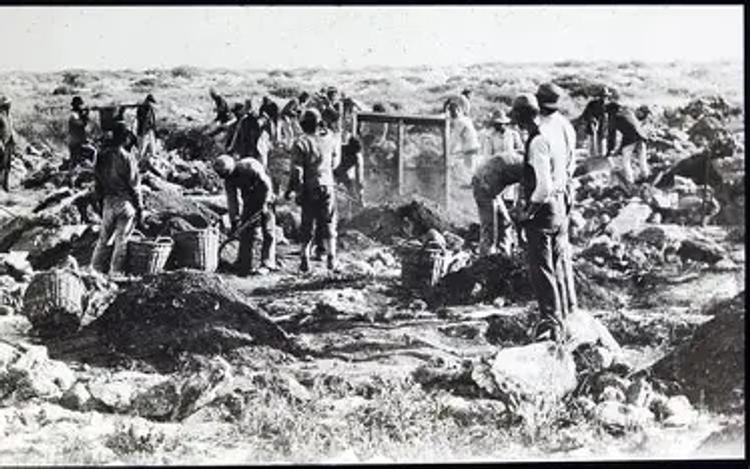
Guano workers at Pelsaert Island
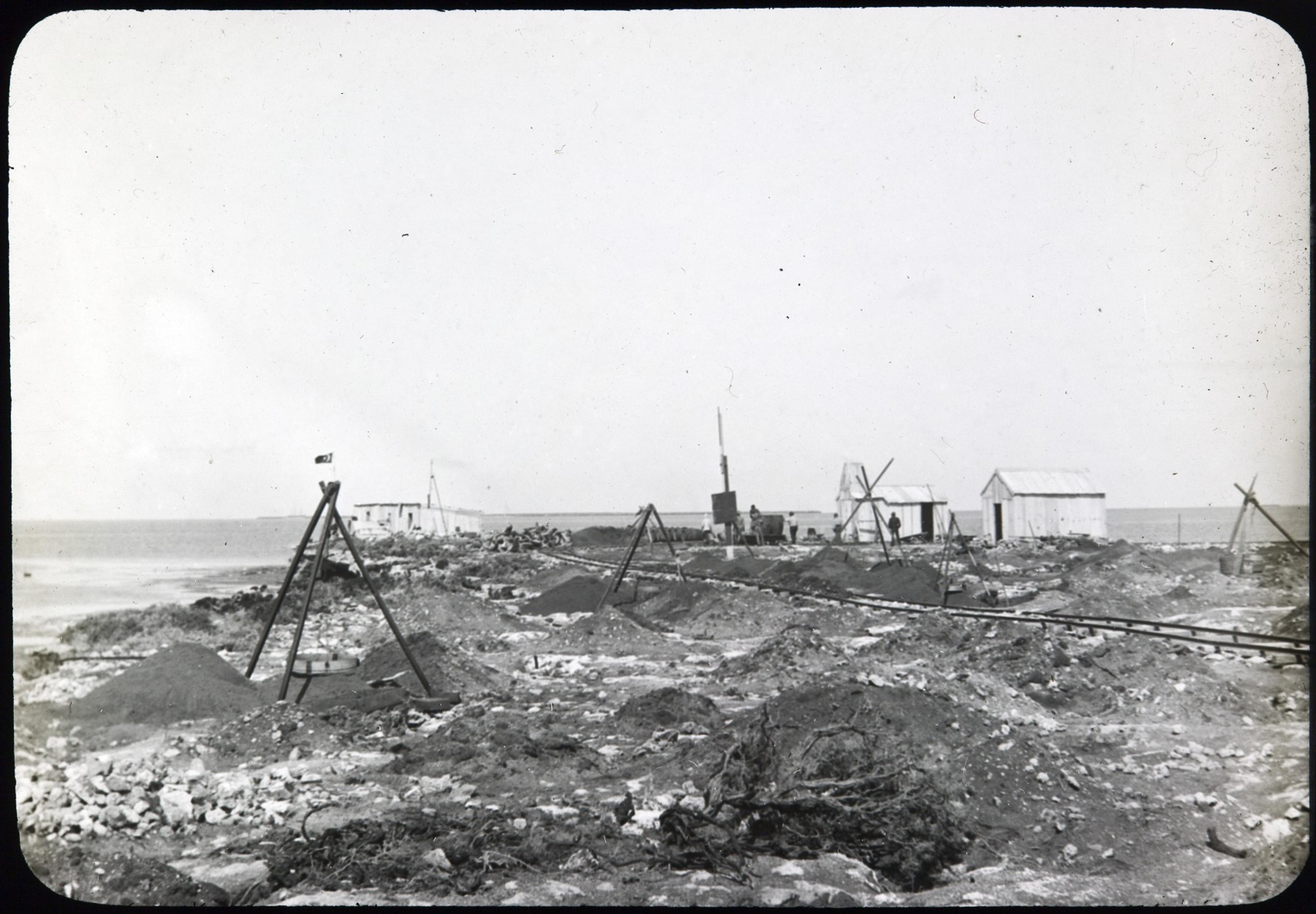
Guano operation on Pelsaert Island. courtesy of the WA State Library.
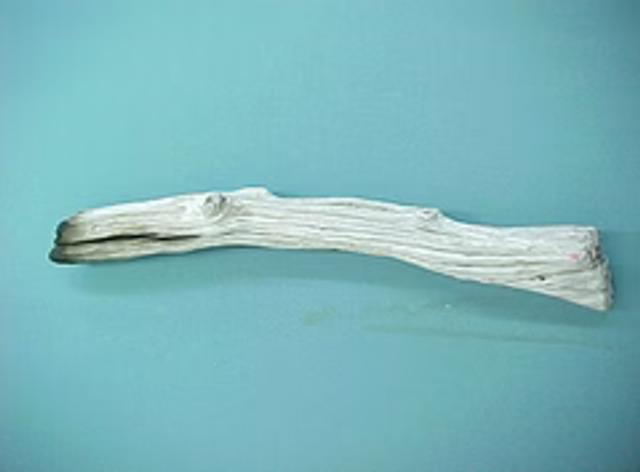
Sandalwood from the ss Windsor after 95 years in the ocean.
The steam ship Windsor left Geraldton at 3.30pm on 1 February, loaded with 150 tons of sandalwood. By noon the following day, she was breaking up on the reef at Pelsaert Island in southern group of the Abrolhos Islands off Geraldton. Her bearings to steer around the islands were miscalculated. She was stuck fast and started to break up immediately.
Help was on its way via the ss Penguin and ss Venus, the Penguin had to sail from Fremantle, causing a delay for the crew on the wreck. Due to heavy tides and a strong wind, a plan was made by semaphore messages to use a lifeboat to transfer four crew at a time to the Penguin. Meanwhile the rescue crew would wait on the reef with the stricken ship and help the crew to board the lifeboat.
Mr A Davis, manager of the guano operation on Pelsaert Island had gone out to meet the Penguin when the Windsor wrecked. It was clear that with the current and the tides the way they were, and a strengthening offshore wind, there was nothing that could be done with the dinghies from Pelsaert Island.
Fishermen from the island and nearby islands put out to aid where possible, although they could not approach the reef in their sail boats for fear of being blown onto the reef or out to sea. They stood by to assist the steamers.
Samuel Mann and Henry Beyer were employed by Fallowfield & Co. at the Pelsaert Island guano operations. They had been on the island only a few days.
From Pelsaert Island they could see the reef and hear the crew and rescuers calling out from the wreck. They didn’t understand why more was not being done from the island. After work on 5 February Samuel and Henry made the decision to take a dinghy and go to help rescue the stricken crew.
The last time they were seen was from the island as the sun was setting. The dinghy was caught in the wind and was drifting out to sea. Samuel and Henry had no experience with the strong current, the direction of the tide or the fierce wind of the Abrolhos Islands. There was no lighthouse at the islands for seamen to navigate the dangerous reefs that surrounded them.
Mr Davis returned to Pelsaert Island after Samuel and Henry had left on their brave but misguided mission. He was certain he would have stopped them if he had been there.
By 5 February the crew of the Windsor was aboard the Penguin. They transported the crew to Geraldton. The officers, apprentices and European crew members were taken to Fremantle to be reassigned. The Chinese crew remained on board the Penguin until 10 February when they were transferred to the ss Sultan and taken directly to Singapore. By the rules of their indenture, they had to be returned to where their papers were issued.
Then the Penguin and the Venus were instructed to return to Pelsaert and commence a search for Samuel and Henry. The Wanda was one of several fishing boats that searched for several days without finding a trace of the men. Wanda returned to Geraldton and other boats went back to work leaving the steamers to search the islands until 15 February.
On 16 February the dinghy taken by Samuel and Henry was found upside down on a nearby island, four miles from away from Pelsaert Island. There was no sign of the missing men. The fishing boat Iris returned from the islands to Geraldton to report the finding of the dinghy.
On 17 February Police searched the men’s personal effects at the accommodation on Pelsaert Island. They hoped to find some information about relatives or friends. Having been at the islands for only a few days, the other guano workers had not known them well. The only thing found was a name in Henry’s pocketbook; Mrs Finlayson, 54 Stirling Street, Perth.
After investigation it was clear neither Samuel nor Henry had family in Geraldton. There was talk about Henry being a German who had worked on the wharf at Bunbury, but inquiries at the wharf and with the Lumpers Union revealed there was no record of employment or union membership. Without those he could not have been employed.
Reportedly Samuel came from Melbourne. Agents for the Windsor tried to find relatives there. The ship’s owners, Watts, Watts & Co. of London sent money to be handed to the men’s widows or dependent relatives.
A testimonial fund was started in Geraldton by locals for family of the men when they were found. Almost £50 was raised. They were hailed as brave men who tried to help the crew of the wreck.
The Windsor’s agents advertised in newspapers all over Western Australia, asking for relatives of the men to come forward. Then they advertised in the eastern states. Finally, in May the men were listed as dying intestate and were registered in the interstate estates under curator Gervaise Clifton. Samuel had left £1 16s5d while Henry had 16s 8d. Their share of the company’s testimonial money was £3 13s.It is unknown whether relatives were found for either of the men.
The disappearance of the men at sea was a tragic end of two men trying to help others in trouble at sea. They didn’t understand the difficult and dangerous reefs, currents and winds of the Abrolhos Islands. heir loss was added to the loss of three crew members of the Windsor. The government was called upon to honour a promise made to fishermen that a lighthouse would be built at the islands to prevent wrecks and unnecessary deaths like those of Samuel and Henry.
In April 1908 the Warden’s Court of Coolgardie granted Henry Beyer a prospecting area. Did he apply for that before he went to the Abrolhos Islands? Is that where Henry came from? Were our forgotten heroes two of the many who had changed their name to escape an unpleasant past? We will never know, apart from two pieces of information - Samuel and Henry were lost from the Pelsaert Island guano operations in February of 1908, and their bodies were never recovered.