Gustav Nordstrom and Samuel Freidlund
Vessel Name: SS Perth
Gustav Nordstrom and Samuel Freidland
Drowned; one body recovered and one never found
18 July 1915
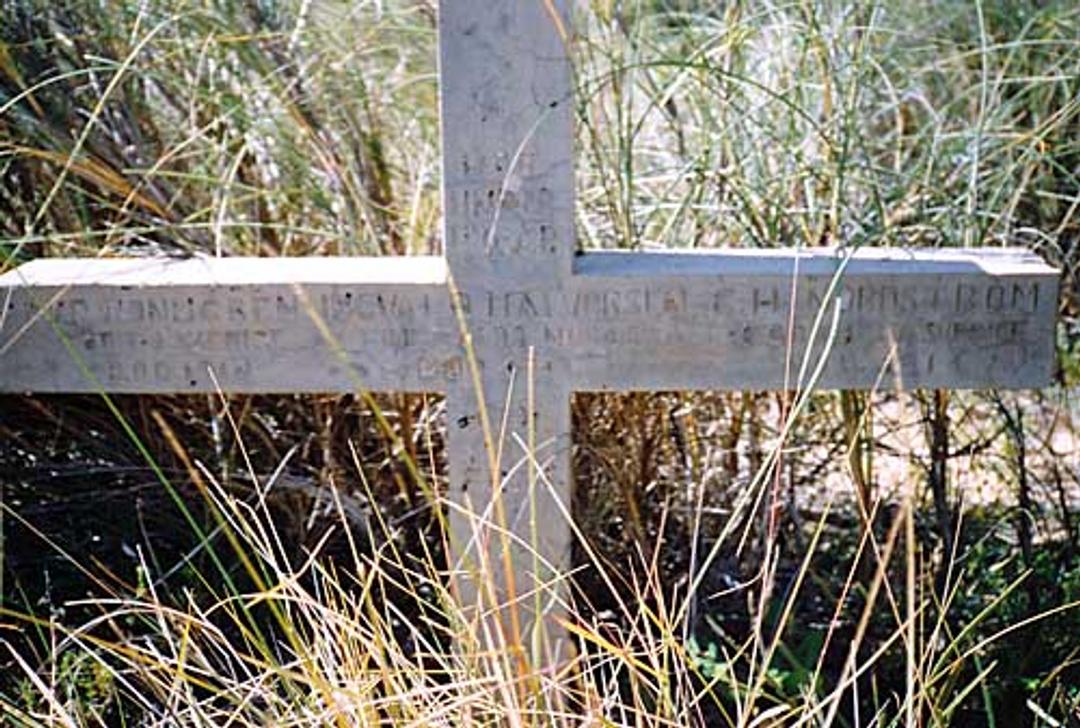
Burial cross Courtesy Martin Dowson
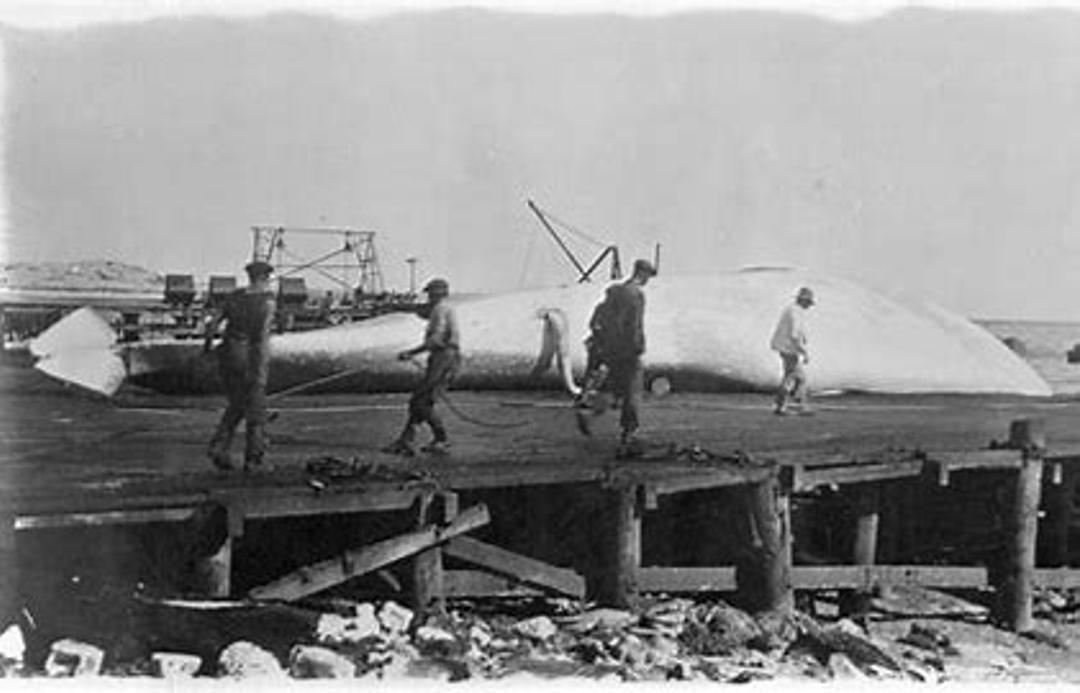
Point Cloates Whaling jetty Courtesy State Museum WA
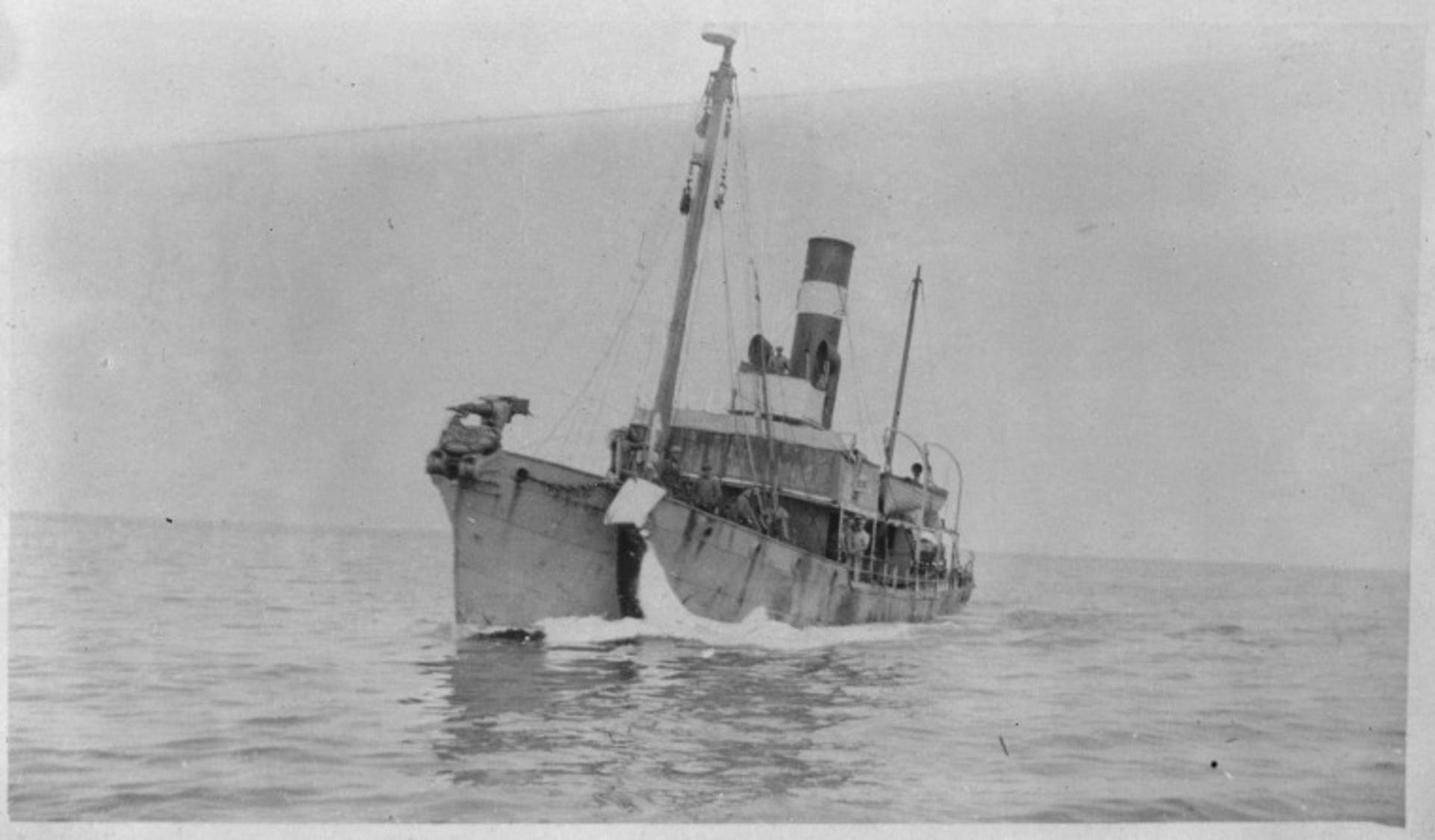
Whale processing schooner at Point Cloates Courtesy State Museum WA
Gustav Helmer Nordstrom and Samuel Freidlund were two of the whaling crew of the SS Perth. They were Swedes who put out from Norway, signed on with the Norwegian Whaling Company based in Point Cloates, Western Australia.
Gustav was born on 18 January 1887. Samuel was younger. He was born on 6 March 1895. Both men were single and agreed to the company rule that they would forgo their wages until they were discharged on their return to Norway, minus their living costs.
Clothing and personal items were purchased from the boat’s “slop chest”, a supply of essentials of clothing and personal needs kept by the boat for crew to access. The purchase price was borne by the company and written against Gustav and Samuel’s withheld wages.
The whaling company liaised with the Norwegian Consul based in Fremantle for family matters. It appears they kept little information on their employees, and relied on the Consul, Mr Steng to contact families and help to recruit workers. The whaling company employed Swedes and Norwegians, and the Norwegian Consul communicated with both countries.
The SS Perth and her sister boat Prince George were single screw schooners fitted out to be whaling factory boats. They were responsible for flensing whales brought in by up to 10 whale chasers. They had crews of 100 hands each.
Once the tonguing was done (the blubber was stripped) the carcasses were taken to the onshore station for processing and boning. There were huge storage facilities for oil and other products.
Captain Gustav Bruun Bull was the offshore manager. He was based on the Perth and controlled all the aspects of the offshore operations: the whale chasers, the factory boats and the crews that operated them. Mr Anvig managed the onshore whaling station and all its components. Together they oversaw the thriving whaling company and its large workforce.
The boats had dinghies, prams (small dinghies) and ladders always at the ready. Workers like Gustav and Samuel could be sent to the Prince George or the onshore station to work if either was in need. There were always messages to run between the boats, and supplies to be distributed. Crew members were expected to use the dinghies and prams to carry out their duties.
Gustav and Samuel’s life aboard the factory boat was hard. The boats were moored three miles offshore in a lagoon anchorage which was two miles wide and eight miles long, protected by a long reef. It meant they were isolated by water as well as the 150 miles to the nearest settlement in Carnarvon. Then men worked long hours of back breaking work. The climate was harsh. They had little in the way of a social life.
Point Cloates was visited by trading vessels which supplied coal for the boilers, provisions and supplies. Trading boats were a welcome sight. They brought news, mail and unfamiliar faces were a fresh change.
The company doctor was a medical student yet to take his final exams. Dr Harald Ulrich Svendrup was a conscientious man who carried out his medical duties with care. He made regular visits to the boats where crew members of the whaling company and from trading boats could be treated.
On 17 July 1915 the coastal trading schooner Olive was anchored in the lagoon. One of her crew members had rowed to the Perth to see Dr Svendrup. While he was there, he met Gustav and Samuel, and he shared a bottle of whiskey with them. Alcohol was not permitted aboard the whaling boats, and the whiskey was taken on board against regulations.
When the crew member left the Perth Gustav and Samuel decided to follow him to the Olive, presumably with the intention of procuring more whiskey. They quietly made their way to a dinghy tied alongside and left unnoticed. Since their work was done, no one missed them….. or so they thought.
The fireman from the whale chaser Frey Rolf Ambjornsen was had been treated by Dr Svendrup at the time. He reached the deck just in time to see Gustav and Samuel row away from the Perth. Rolf immediately alighted the ship’s ladder and jumped into a pram. He was aware he would be reprimanded and probably punished if he lost the Frey’s dinghy. There was a dog in the pram, but Rolf ignored it in his haste to get Frey’s dinghy back.
Gustav and Samuel had not reached the stern of the boat when Rolf caught up to them. They exchanged rowboats and Gustav and Samuel rowed the pram. They did not realise the pram belonged to the Olive. The dog remained in the pram.
Later in his statement, Rolf claimed Samuel appeared drunk, and although it was clear Gustav had been drinking, he did not seem intoxicated.
The next morning, 18 July, Gustav and Samuel were missed when they were not on deck to begin work. The missing dinghy led to questions aboard Olive and prince George.
Captain Bull instructed inquiries be made at the onshore station and the other boats in the lagoon. He directed a search of the shoreline be started and Frithjof Larsen, the motorboat driver, was instructed to search the water. There was no trace of Gustav, Samuel or the missing dinghy.
Captain Bull took a motor launch and searched the reefs for three miles to the north and south. He also found nothing.
On 18 July the dog was found and rescued by a seaman. There was no sign of Gustav, Samuel or their dinghy. Captain Bull took the launch and searched the outer areas of the lagoon and the reefs for three miles to the north and south. He found nothing.
Bunbury 20 July Captain Bull, Mr Anvig, Dr Svendrup and Mr Steng realised there was likely no hope for Gustav and Samuel. They had asked every vessel entering and leaving Point Cloates if they had seen the men, or perhaps the dinghy floating free. They had searched everywhere they could think of.
Captain Bull’s own investigations had caused the managers to believe Gustav and Samuel had rowed over the Perth’s aft moorings. The mooring ropes tightened and loosened as the schooner moved with the winds and tides and rowing over the mooring ropes would easily capsize the dinghy they were in. It was time to advise the families of their loss. This task fell to the consul.
On 25 July carpenter john Alexandersen and hands Helmer Sundberg and Carl Berglund were on the beach100 yards south of the shore station. They discovered a body washed up by the sea. The face was no recognisable but on a closer look the men could see parts of tattoos on the chest and left arm. They recognised them as Gustav’s.
Dr Svendrup was found and he attended the scene and immediately pronounced Gustav dead. In the circumstances he recommended no further inquiry was required and wrote the death certificate. The level of decomposition prompted a swift burial, and Gustav’s remains were taken to the top of a sandhill and buried next to a whaler who had died on 4 July. He was 28 years old.
Gustav had a debt to the company for purchases made from the slop chest and advances to his wages. His personal items and clothing were auctioned aboard Perth and the proceeds sent to Mr Steng who settled Gustav’s debt against his earnings. The remainder was left for Mr Steng to send to Gustav’s family in Sweden.
Samuel’s remains were never found. During August 1915 police conducted an enquiry. Further investigations were made in September that year, but there was no new evidence or information, and no trace of forty-year-old Samuel was found. On 21 September the Ashburton Coroner CG Thorpe concluded that Samuel had drowned, and informed Onslow’s Resident Magistrate it was safe to cease investigations and close his file.
The company auctioned Samuel’s possessions and the sum of £1 – 4s – 3d was sent to the family in care of Mr Steng.
There is a wooden cross atop the sandhill where Gustav is buried. It bears the names of Gustav Helmer Nordstrom and two other whalers. (Read the Ake Ronngren story).
There is no sign that Samuel was at Point Cloates, another lost fisher who has been forgotten by time on the long Western Australian coast.